Tax and allowances
Nobody deducts tax from your State Pension. That is the catch.
Sponsored information from Nesso Srl · general guidance, not personal advice
- State Pension is taxable income, but it is paid gross — no tax is deducted before it arrives.
- If tax is due, HMRC normally collects it elsewhere, usually through the tax code on another pension or a job.
- With no other PAYE source, HMRC may instead send a Simple Assessment calculation to settle directly.
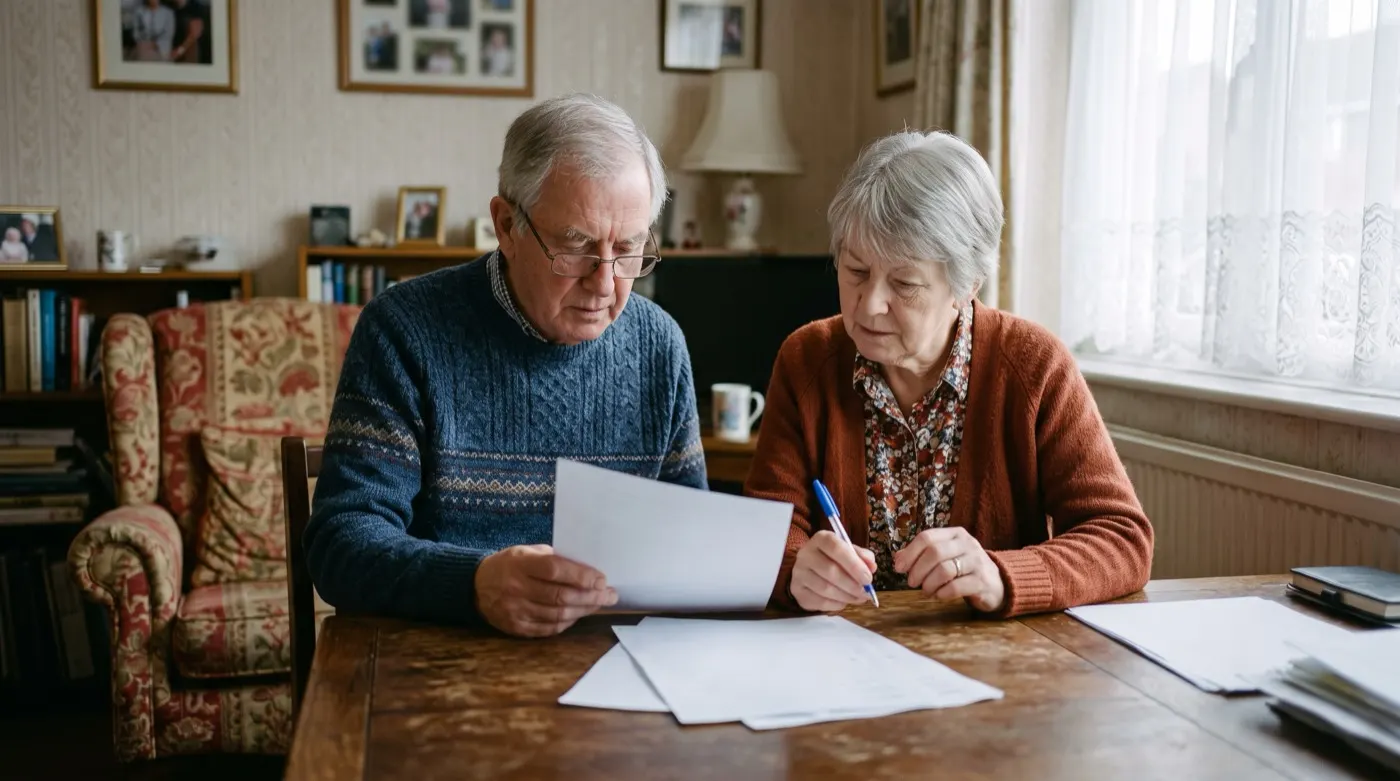
A State Pension arrives in full. Nothing is taken off it. That is not because it is tax free — it is taxable income — but because there is no mechanism to deduct tax from it at source. The tax, if any is due, gets collected somewhere else.
For somebody whose State Pension is their only income, this usually means nothing happens at all. For somebody with a workplace pension as well, it means their workplace pension is quietly doing the work for both.
Taxable, but paid gross
A salary has tax deducted under PAYE before it reaches a bank account. So does most workplace and personal pension income. A State Pension does not. The Department for Work and Pensions pays the entitlement in full, and HMRC deals with the tax separately.
The amount that counts for tax is the amount you were entitled to in the tax year — which, because of the four-weekly payment cycle, is not necessarily the total of the deposits that landed between April and April. Why your pension lands every four weeks, not monthly explains that mismatch.
 Term explained: paid gross
Paid without tax deducted. It does not mean the income is exempt from tax — only that any tax owed is collected through another route rather than taken off the payment itself.
Route one: a tax code on another pension
This is the common case. Where someone has a workplace or personal pension, or a job, HMRC reduces the tax-free allowance in the tax code applied to that source, by roughly the amount of the State Pension.
The effect is that the other pension has extra tax deducted from it, enough to cover the tax on both incomes. The State Pension still arrives in full. The workplace pension arrives noticeably lighter than its gross figure, and the tax code is where the explanation sits.
This is why people sometimes conclude that their workplace pension is being taxed unfairly. It is not being taxed at a special rate; it is carrying the tax for the State Pension as well.
What that looks like in 2026/27
The tax-free Personal Allowance has been £12,570 since April 2021. The full new State Pension for 2026/27 is £241.30 a week. Across 52 weeks that is £12,547.60.
| Illustration, full new State Pension only | Figure |
|---|---|
| Personal Allowance, 2026/27 | £12,570.00 |
| Full new State Pension, 52 weeks at £241.30 | £12,547.60 |
| Allowance left for any other income | £22.40 |
Illustration only. Arithmetic on published figures for someone on the full new rate with no other elements. Most people's entitlement is not exactly the full rate, and allowances can differ — for example where Marriage Allowance has been transferred.
The point of the table is not the £22.40 itself. It is that for somebody on the full new rate, there is almost no allowance left to shelter anything else. A modest second pension, or bank interest, is therefore taxable from close to its first pound. The wider effect of that is the subject of the allowance that stays still while pensions rise.
Route two: Simple Assessment
If there is no other PAYE source to adjust — State Pension and, say, some savings interest, but no workplace pension — then there is no tax code to work with.
In that situation HMRC may issue a Simple Assessment: a calculation sent out after the end of the tax year, setting out the income it holds on record, the tax it believes is due, and a deadline to pay. It is not a tax return. Nothing has to be filled in, although the figures should be checked, and there is a route to query them if they look wrong.
Route three: Self Assessment
Some pensioners are inside Self Assessment for other reasons — rental income, self-employment, higher income, or a requirement HMRC has notified. Where that is the case, the State Pension is simply declared on the return with everything else.
Being in Self Assessment is not a consequence of receiving a State Pension. It depends on the rest of the picture.
Why the April increase can produce a letter in the autumn
When pension rates rise in April, the amount HMRC needs to collect changes too. Tax codes are reissued, sometimes more than once in a year, and a code that was right in March can be wrong by May.
It is worth opening those letters rather than filing them. A tax code built on an estimate that is too high collects too much tax; one built on an estimate that is too low produces an underpayment to settle later. Both are correctable, and both are easier to correct early.
What is not true
Three things worth stating plainly, because they circulate:
- A State Pension is not tax free. It is taxable; it is simply not taxed at source.
- An April increase is not a guaranteed increase in spendable income. Part of a gross rise can be absorbed by tax, depending on total income.
- There is no fee, registration or application involved in any of this. HMRC and the Pension Service contact people directly, and nobody needs to pay a third party to receive a pension increase or to have a tax code corrected.
What to take from it
If your State Pension arrives in full and your workplace pension looks short, that is the system working as designed. The number to check is the tax code on the other income, and the place to check it is the coding notice HMRC sends out. Where the State Pension is the only income, the thing to watch for is a Simple Assessment rather than a payslip.
Common questions
Why is no tax taken off my State Pension?
There is no PAYE mechanism applied to it. It is paid gross, and any tax due is collected through a tax code on other income or through a Simple Assessment.
Is my State Pension tax free if it is my only income?
It is taxable, but if the amount is below your Personal Allowance there will usually be no tax to pay. That is a consequence of the allowance, not an exemption.
Why has my workplace pension suddenly dropped?
A changed tax code is the usual explanation. Where a State Pension is also in payment, the code on the workplace pension is reduced so that it collects the tax on both.
Do I have to fill in a tax return?
Not because of a State Pension. A Simple Assessment requires no form, only a check of the figures and payment if tax is due. Self Assessment applies for separate reasons.
Official sources
- HMRC — How your State Pension is taxed: the treatment of State Pension income and how tax is collected.
https://www.gov.uk/guidance/how-your-state-pension-is-taxed - GOV.UK — Tax when you get a pension: the interaction between State Pension, other pensions and tax codes.
https://www.gov.uk/tax-on-pension - GOV.UK — Simple Assessment: how HMRC calculates and collects tax without a return.
https://www.gov.uk/simple-assessment - GOV.UK — Income Tax rates and Personal Allowances: the current allowance and the rate bands.
https://www.gov.uk/income-tax-rates
General information, not advice
This article explains published rules and rates for general orientation. It is not personal financial, legal or tax advice, and it is not an official GOV.UK, Department for Work and Pensions or HMRC publication. Figures are the published official rates for the stated period or clearly labelled illustrations — never a sum confirmed as owed to any individual.
This website does not administer State Pensions, process claims or release additional payments, and it recommends no particular provider or product. What applies in a particular case depends on that person's own record and circumstances. For a decision about your own entitlement, your pension correspondence and the Pension Service are the authoritative sources. Nothing on this site is required in order to receive a State Pension increase, and no payment, registration or bank detail is ever needed here.
One email a week. Three money topics, explained without jargon. We send a confirmation email first, and every issue has an unsubscribe link.

 State Pension